With an estimated 100,000 churches projected to close or be repurposed over the next decade, a changing religious landscape is raising serious questions about the future of Christianity in America.
Grace Next Door | Faith & Culture | October 2, 2026
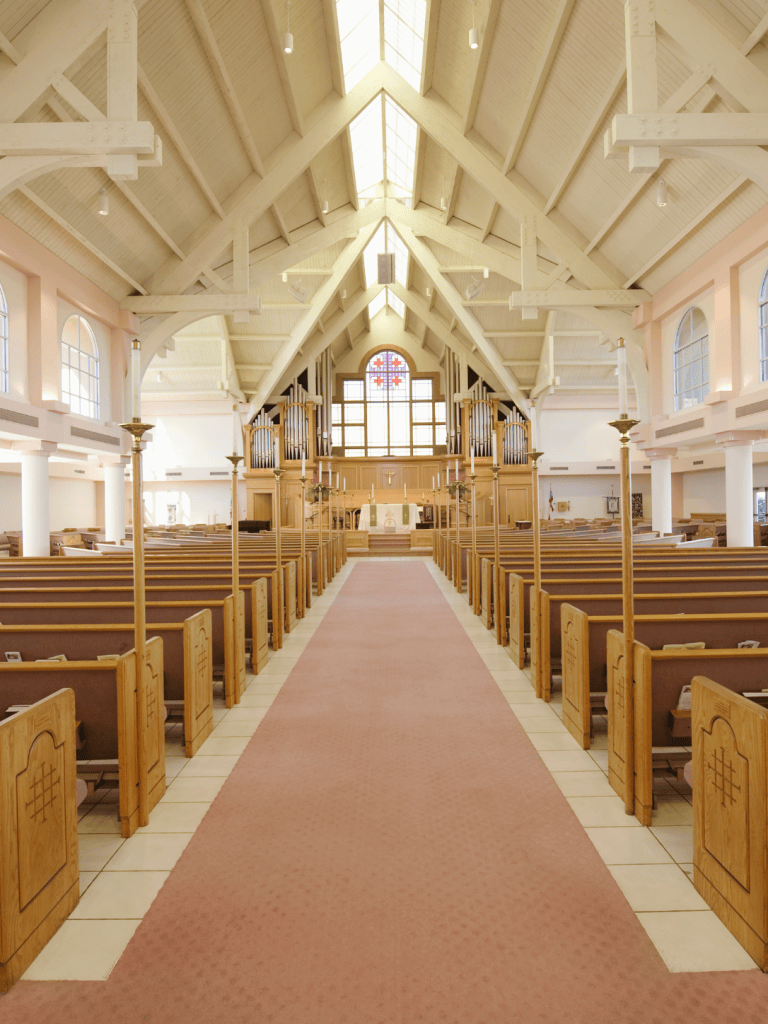
For generations, church buildings have stood at the center of American communities. Their steeples have defined neighborhood skylines, their sanctuaries have hosted countless weddings and funerals, and their congregations have served as gathering places for families seeking faith, fellowship, and belonging.
But across the United States, an increasing number of those sanctuaries are falling silent.
According to an October 1 CNN report by John Blake, experts project that approximately 100,000 American churches could close or be repurposed over the next decade, a development that could dramatically reshape the nation’s religious and social landscape.
The staggering projection is explored in the four-part PBS documentary series Christianity at a Crossroads, which examines the challenges facing American congregations and the changing nature of religious participation.
Empty Pews and Closing Doors
In Belding, Michigan, a United Methodist congregation that had served its community for approximately 120 years gathered in 2024 to hear an announcement no church member wants to receive: their church was closing.
A sanctuary originally built to accommodate approximately 1,000 worshippers had dwindled to roughly a dozen elderly congregants.
Their story is becoming increasingly familiar.
Aging memberships, declining attendance, rising property expenses, and changing cultural attitudes toward organized religion have left many congregations struggling to remain operational.
And the consequences extend far beyond Sunday morning worship.
Churches have historically served as important community institutions, providing food assistance, counseling, charitable outreach, volunteer networks, and support for struggling families. Their disappearance can leave significant gaps, particularly in communities where such resources are already limited.
Is America Becoming a Post-Christian Nation?
Christianity remains the largest religious affiliation in the United States, but its cultural influence and institutional presence are changing.
The CNN report notes that approximately 62% of American adults still identify as Christian, even as many traditional congregations struggle to attract and retain active participants.
Interestingly, the outlook is not entirely negative.
Research highlighted in the report from the Hartford Institute for Religion Research indicates that in-person worship attendance has recently shown signs of recovery, with increases in participation, charitable giving, and volunteer involvement.
Nevertheless, researchers do not anticipate a return to the widespread religious participation associated with the middle of the twentieth century.
America’s relationship with organized Christianity is changing, and church leaders are increasingly confronted with an uncomfortable question:
How much of what we recognize as modern church life is essential to Christianity, and how much is simply the institutional structure we have built around it?
Perhaps We Need to Rethink What Church Looks Like
There is an important distinction that can easily be overlooked in conversations about declining church attendance.
A church building is not the Church itself.
The earliest Christian communities did not depend on elaborate sanctuaries, expensive facilities, professional production teams, or institutional infrastructure to gather and spread the Gospel.
They met in homes, broke bread together, prayed, taught, ministered to their communities, and shared their faith.
Acts 2:46 describes early believers gathering both in the temple and from house to house.
Their identity was not rooted in the buildings they occupied, but in the faith they shared and the message they carried.
That biblical model is particularly relevant as modern congregations reconsider how they operate.
CNN highlighted one Maryland congregation that ultimately relinquished its expensive church property and relocated to a smaller shared worship space. Rather than bringing its ministry to an end, the decision reduced financial pressures and created opportunities for greater organizational stability.
Other growing congregations are embracing digital outreach, smaller gatherings, contemporary communication strategies, and new approaches to community engagement.
These developments raise an interesting possibility: Could the decline of traditional church infrastructure also create opportunities for Christianity to expand beyond its conventional walls?
The Church Must Be More Than a Sunday Destination
The current situation should also prompt serious reflection among Christian leaders.
For decades, much of American church culture has revolved around attracting people to a particular location at a particular time.
Buildings became larger, programs became more elaborate, and maintaining institutional operations often required substantial financial resources.
None of these things are inherently wrong. Facilities, technology, and organized ministries can be valuable tools for reaching people and serving communities.
But they were never intended to become the mission itself.
The Great Commission was not an instruction to construct buildings or preserve institutions. It was a command to go into the world, proclaim the Gospel, and make disciples.
Perhaps one of the most important questions facing Christianity today is not simply how churches can convince more people to return on Sunday mornings, but how believers can take their faith beyond Sunday mornings altogether.
Into neighborhoods. Into homes. Into workplaces. Into communities where people may never voluntarily walk through the doors of a traditional sanctuary.
The End of an Era Is Not Necessarily the End of the Church
The potential closure of 100,000 congregations should not be dismissed or celebrated. Behind those numbers are real people, decades of ministry, cherished memories, and communities that may lose important sources of spiritual and practical support.
But neither should these projections be mistaken for evidence that Christianity itself is approaching extinction.
Church attendance and the condition of individual religious institutions are measurable. The future of faith is far more complex.
Christianity has endured persecution, cultural upheaval, political transformation, and dramatic changes in how believers gather throughout its history.
For Christians, the words of Jesus in Matthew 16:18 remain central:
“I will build my church; and the gates of hell shall not prevail against it.” (KJV)
Buildings may close. Denominations may reorganize. Traditional models of ministry may become increasingly difficult to sustain.
But the biblical mission of the Church has never been dependent upon the survival of a particular building.
America’s religious landscape may indeed be approaching a historic transformation.
The question now is whether Christian communities will respond by focusing exclusively on preserving what once was—or rediscovering the mission that gave the Church its beginning.
Perhaps the greatest opportunity facing the American Church is not simply finding new ways to fill its buildings, but finding new ways to reach the world outside them.
Source: John Blake, CNN, “A ‘tsunami’ of church closings is poised to remake America,” October 1, 2026. Additional context: PBS documentary series Christianity at a Crossroads.


Leave a Reply